
Ultimate Guide to Side Mount Garage Door Openers
Key Points
- Side mount garage door openers are wall-mounted, saving ceiling space and operating quietly.
- Major brands include Chamberlain, LiftMaster, Genie, and Skylink, with prices ranging from $650 to $950.
- They must comply with UL 325 safety standards, ensuring reversal and entrapment protection.
- A surprising detail: These openers can handle doors up to 850 pounds, suitable for most homes.
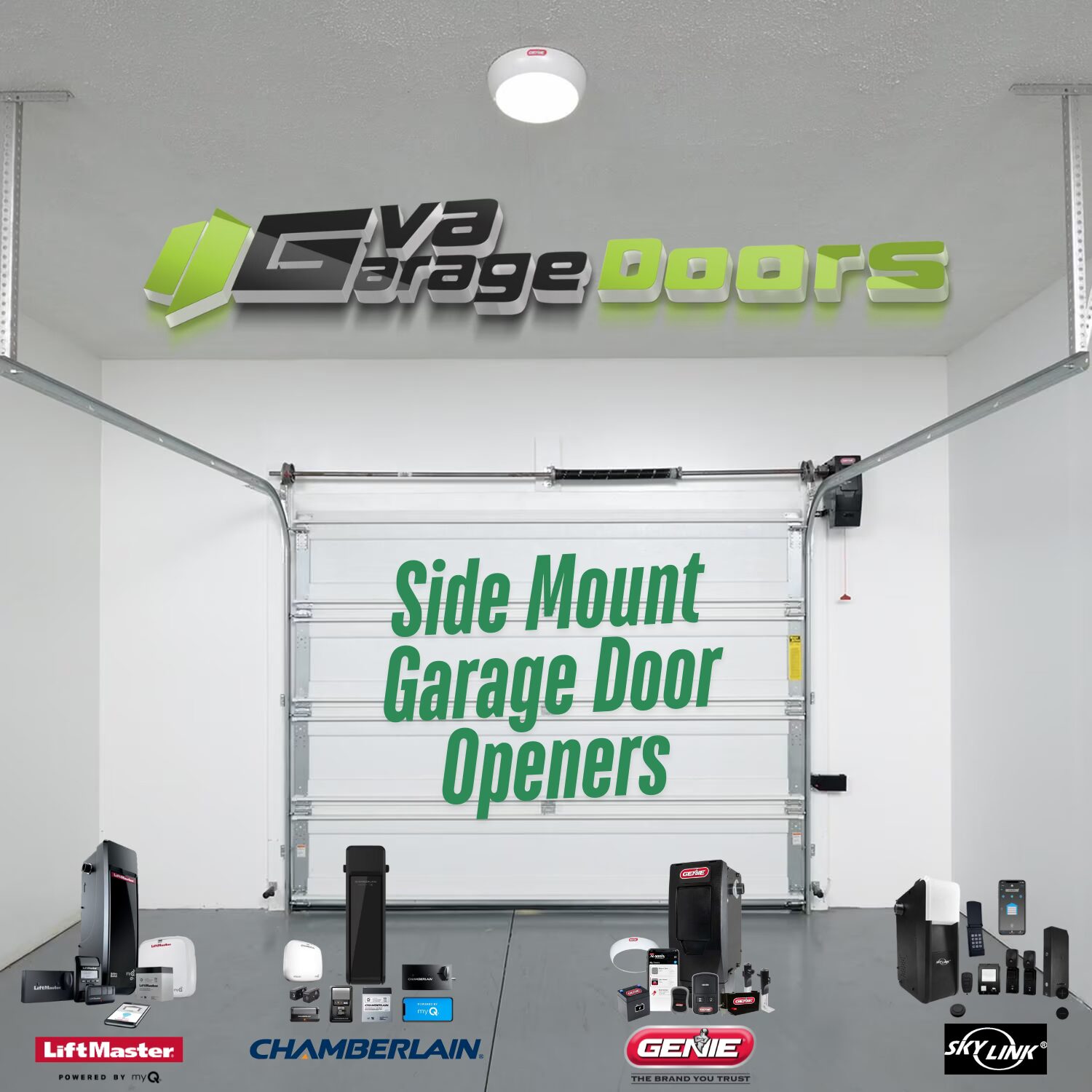
If you’re considering upgrading your garage door system, you may have come across the term side mount garage door opener. Also known as a wall-mounted or jackshaft opener, this type of garage door opener is mounted on the wall beside your garage door rather than on the ceiling.
Side mount openers are becoming increasingly popular among homeowners, and for good reasons. They offer a space-saving design and quieter operation compared to traditional ceiling-mounted openers. Instead of a bulky motor unit and rail taking up ceiling space, a side mount garage door opener sits neatly on the side of the door, freeing up overhead room for storage or just a cleaner look.
Who benefits from a side mount opener? Homeowners with limited ceiling space or low headroom garages are prime candidates. If your garage has ceiling obstacles like beams, ducts, or storage racks that would interfere with a normal opener, a side-mounted solution can be a lifesaver. It’s often the go-to choice for garages with high ceilings or unique layouts, where a ceiling track just doesn’t fit. Additionally, those who have rooms adjacent to or above the garage (like a bedroom or living space) will appreciate the quiet operation – side mount openers have fewer moving parts and often use DC motors, resulting in significantly less noise and vibration. No more garage door rumbles shaking the house!
Beyond space and noise, side mount garage door openers bring other advantages. Many models include enhanced security features like automatic deadbolt locks that engage when the door closes, making it harder for intruders to force the garage door open. They often come packed with smart tech, too. Wi-Fi connectivity and smartphone apps allow for remote monitoring and control of your garage door from anywhere, offering great convenience and peace of mind. In short, a side mount opener can modernize your garage with a sleek look, quiet and smooth operation, improved security, and smart home integration – all in one package.
In this ultimate guide, we’ll explain what side mount garage door openers are, how they work, and why they’re gaining popularity among homeowners. We’ll also compare top models, walk through installation tips, tackle common issues, and explore the latest security and smart features available. Whether you have a tight garage space or just want the latest and greatest in garage technology, read on to see if a side mount garage door opener is right for you.
How Side Mount Garage Door Openers Work
So how exactly does a side mount garage door opener lift your heavy garage door without a ceiling rail? The secret lies in the torsion bar. Most modern sectional garage doors have a torsion bar and spring system above the door. A side mount (jackshaft) opener attaches directly to that torsion bar. When activated, the opener turns the bar, which in turn winds or unwinds the torsion springs to lift or lower the door. Essentially, it drives the door directly by the spring system, rather than pulling it up with a chain or belt from the middle.
Here are the key components and mechanics involved in a side mount garage door opener:
-
Motor Unit
 The main motor (often a quiet DC motor) mounts on the wall beside the door, typically at the end of the torsion bar. It provides the torque to turn the torsion bar and move the door. Because it’s mounted to the side, vibrations are minimal and not transferred through your ceiling like with traditional openers, resulting in quieter operation.
-
Drive System
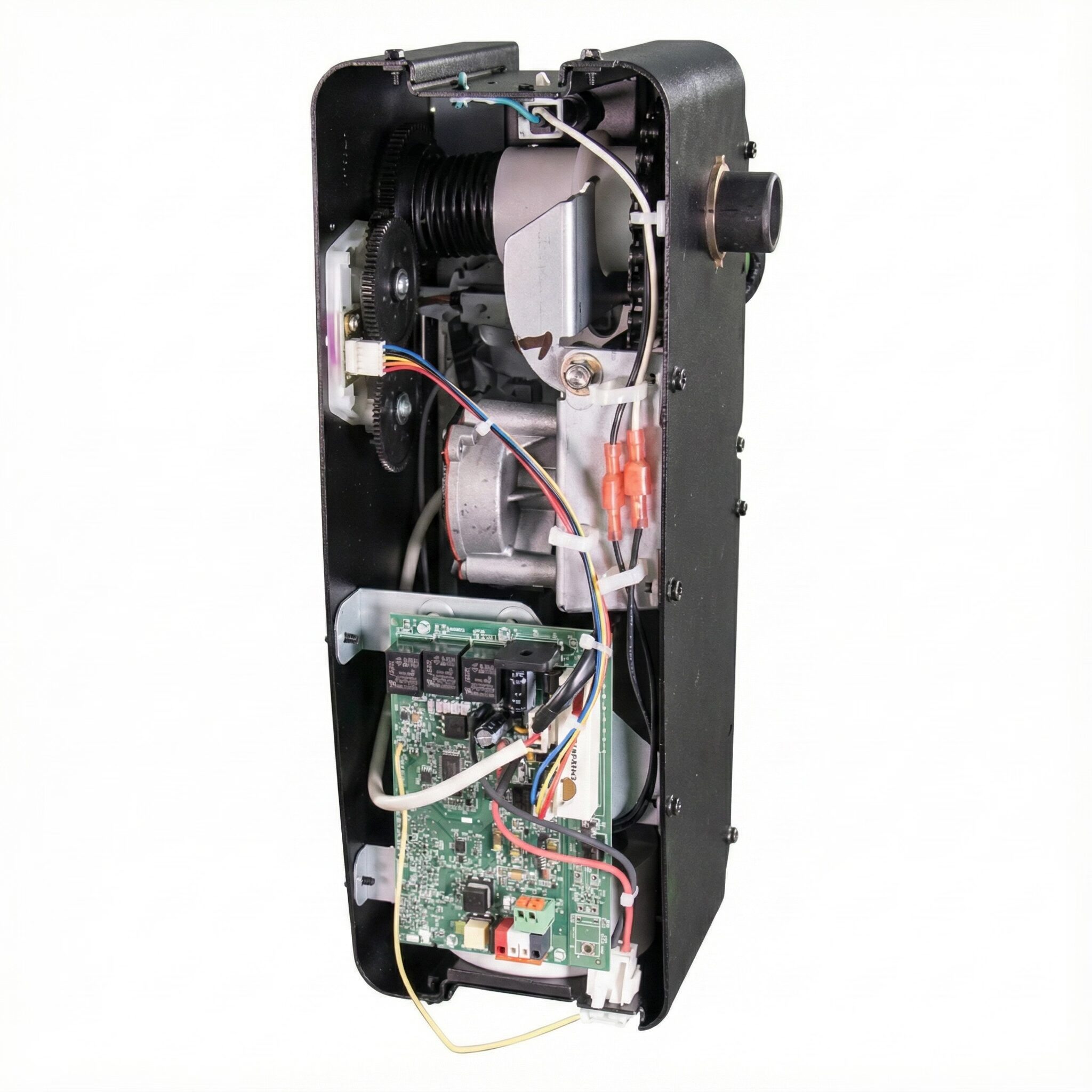 Instead of a long rail with a chain or belt, the side mount opener usually has a gear or pulley system that turns the torsion bar. This direct-drive mechanism means there are fewer moving parts to maintain or create noise.
-
Torsion Bar Attachment
 The opener slides onto the torsion shaft (the rod that runs through your torsion spring) and is secured with set screws or a coupling. When the motor turns on, it rotates the shaft to lift the door. (Important note: because it uses the torsion bar, your garage door must have a torsion spring system for a side mount opener to work. Doors with old-style extension springs on the sides would need a conversion to torsion springs to use a jackshaft opener.)
-
Safety Sensors
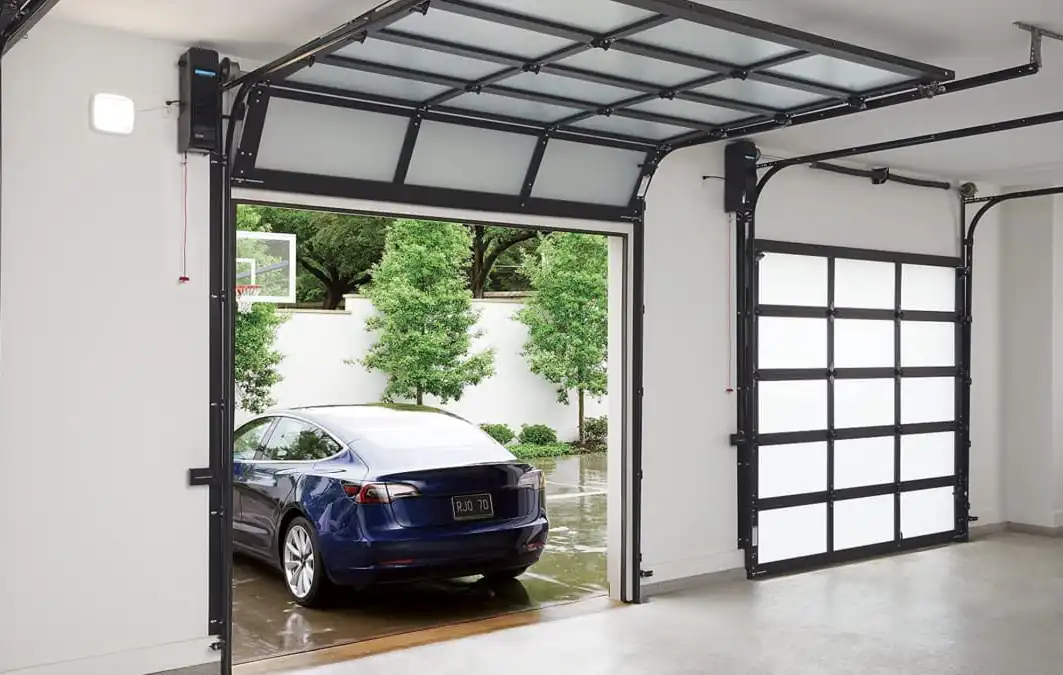 Just like any modern garage door opener, side mount openers use the standard photo-electric safety sensors near the floor. These sensors detect obstructions and are wired to the opener. If something (or someone) is in the door’s path, the sensors tell the opener to stop or reverse. This is a required feature on all garage door openers since the 1990s, and side mounts are no exception.
-
Controls and Remote
 You’ll have a wall-mounted control panel or button to operate the opener from inside the garage, and handheld remote controls (and often a wireless keypad for outside access). Many side mount units also include Wi-Fi capability for smartphone control out of the box, or have it as an add-on. We’ll talk more about the smart features later, but essentially the remote control works the same as any other opener, just signaling the side unit instead of a ceiling unit.
- Additional Components Side mount openers often come with a couple of unique extras. One is a cable tension monitor – a small device that attaches near the bottom of the door’s cable to ensure the cable stays taut. If the cable were to slack or a pulley were to fail, the sensor triggers and the opener stops, preventing a dangerous unwinding. Another common component is an automatic garage door lock (a powered deadbolt) that some models include. This lock bolts into the door track automatically when the door closes, adding a layer of security (more on that in the Security section).
How is this different from a traditional overhead opener?
A standard ceiling-mounted opener uses a long rail and a trolley carriage. When activated, the motor (hung in the center of the garage ceiling) moves a chain or belt along that rail, pulling a arm connected to the top of the door to drag it open or push it closed. This setup requires significant overhead clearance for the rail and works by pulling on the door itself. In contrast, a side mount garage door opener doesn’t pull the door at all – it twists the torsion bar to raise the door.
There’s no overhead rail or dangling chain, which means no more ducking under the opener or losing that prime ceiling real estate to a device. The result is a cleaner look, more storage or ceiling space, and often a smoother motion. Additionally, by eliminating the long rail (which can flex and vibrate) and the chain drive, wall-mounted jackshaft openers tend to operate very smoothly and quietly. The direct drive into the springs also means there’s less strain on the opener itself since the springs do the heavy lifting (as they are intended to).
To sum up, a side mount garage door opener uses a wall-mounted motor unit attached to your door’s torsion bar to lift the door directly. It includes all the usual safety and control features of any modern opener, but with a different mechanism that saves space and reduces noise. It’s a clever piece of engineering that trades the traditional rail-and-trolley for a compact, side-mounted solution.
Comparing Side Mount Garage Door Openers
Not all side mount garage door openers are created equal. Several major manufacturers offer wall-mounted models, each with its own features and benefits. In this section, we’ll give an overview of some top brands and models of side mount openers and compare their pros, cons, and standout features. This will help you understand what’s available on the market and what to look for when choosing the best opener for your home.
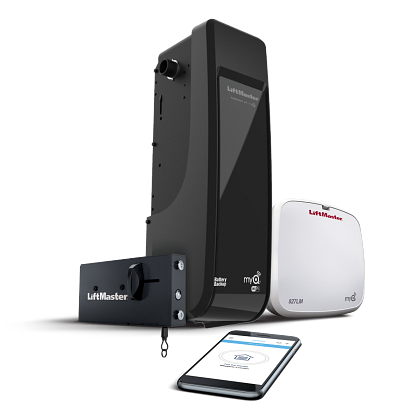
1. LiftMaster 98022 Elite Series
The LiftMaster 98022 is the latest evolution in wall-mount openers, replacing the discontinued 8500 and 8500W models. As the direct successor, it takes the professional-grade reliability of the 8500W and refines it with an updated design and heavy-duty lifting capabilities.
Pros
- Latest model with updated tech.
- Includes Battery Backup & Auto-Lock.
- Heavy-duty lifting capacity.
- Extremely quiet operation.
Cons
- Premium price point.
- Professional installation highly recommended.
- Wall-mount specific requirements (torsion bar).
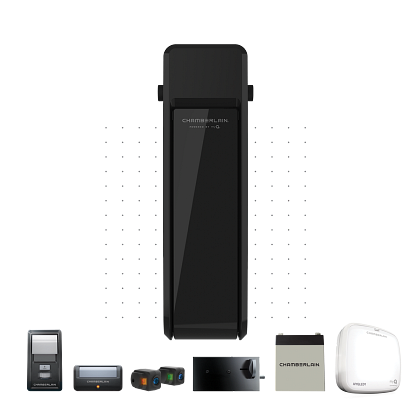
2. Chamberlain RJO101
Chamberlain is the sister brand of LiftMaster aimed at DIY consumers. The Chamberlain RJO101 is the current flagship wall-mounted opener, replacing the older RJO70 and RJO20 models. It parallels the LiftMaster 98022 in many features but is packaged specifically for the retail market.
Pros
- Feature-loaded (Wi-Fi, Battery, Lock included).
- Consumer-friendly package for DIYers.
- Excellent smart features via myQ app.
- Often priced lower than LiftMaster Pro versions.
Cons
- Often back-ordered due to popularity.
- Requires nearby outlet (plug-in unit).
- Installation can still be tricky for novices.
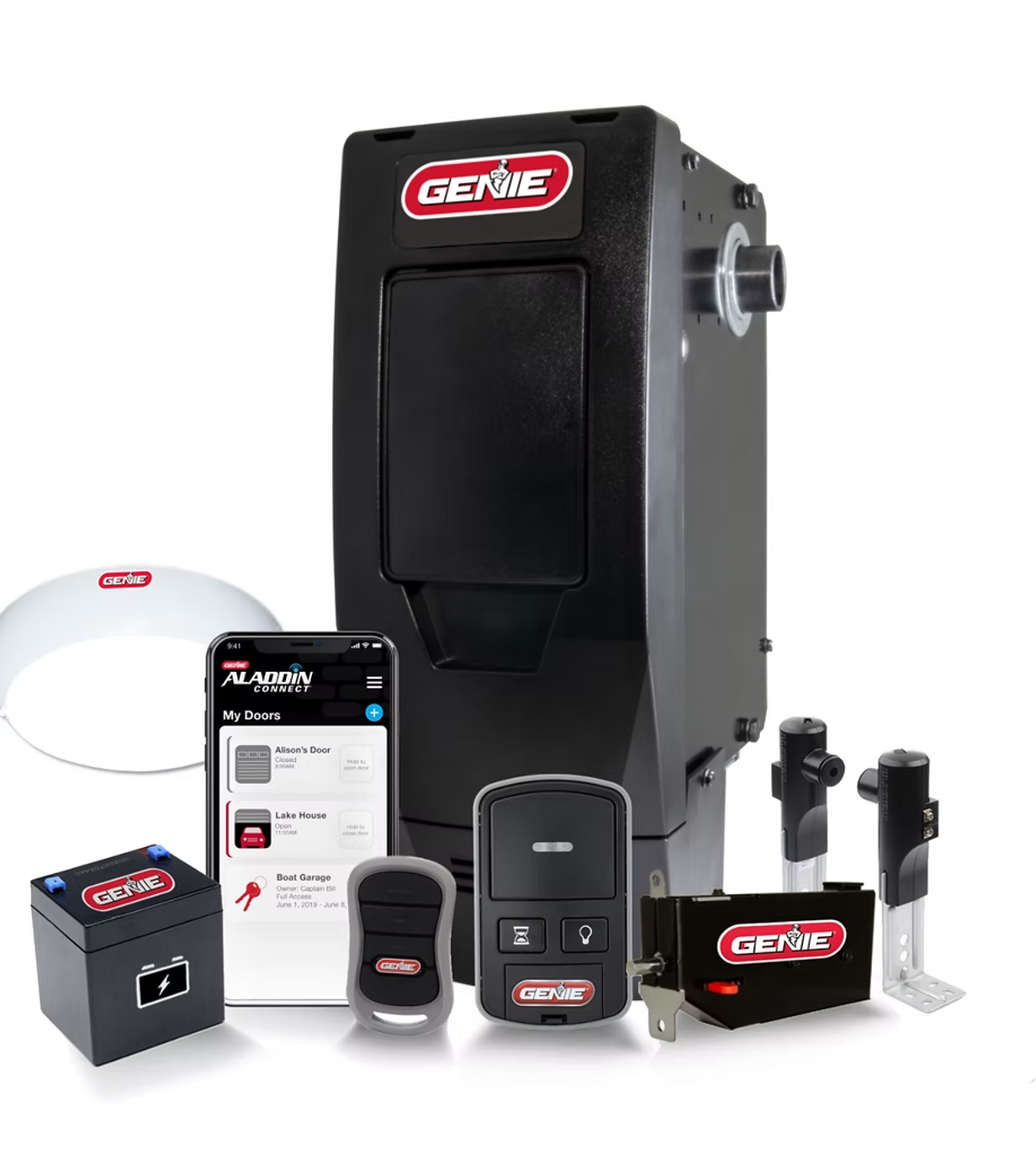
3. Genie 6172H-B (Wall Mount)
Genie, another leading brand, offers the Model 6172H-B (replacing the 6170 series) in their Signature Series. It is a strong competitor packed with tech, appealing especially to smart home enthusiasts.
Pros
- Seamless smart connectivity (Aladdin Connect).
- Battery backup included.
- Very quiet operation.
- Works with Alexa/Google Assistant natively.
Cons
- Operates slightly slower than some overhead units.
- Slightly bulkier in depth than LiftMaster.
- Safe-T-Pulse isn't a physical steel deadbolt.
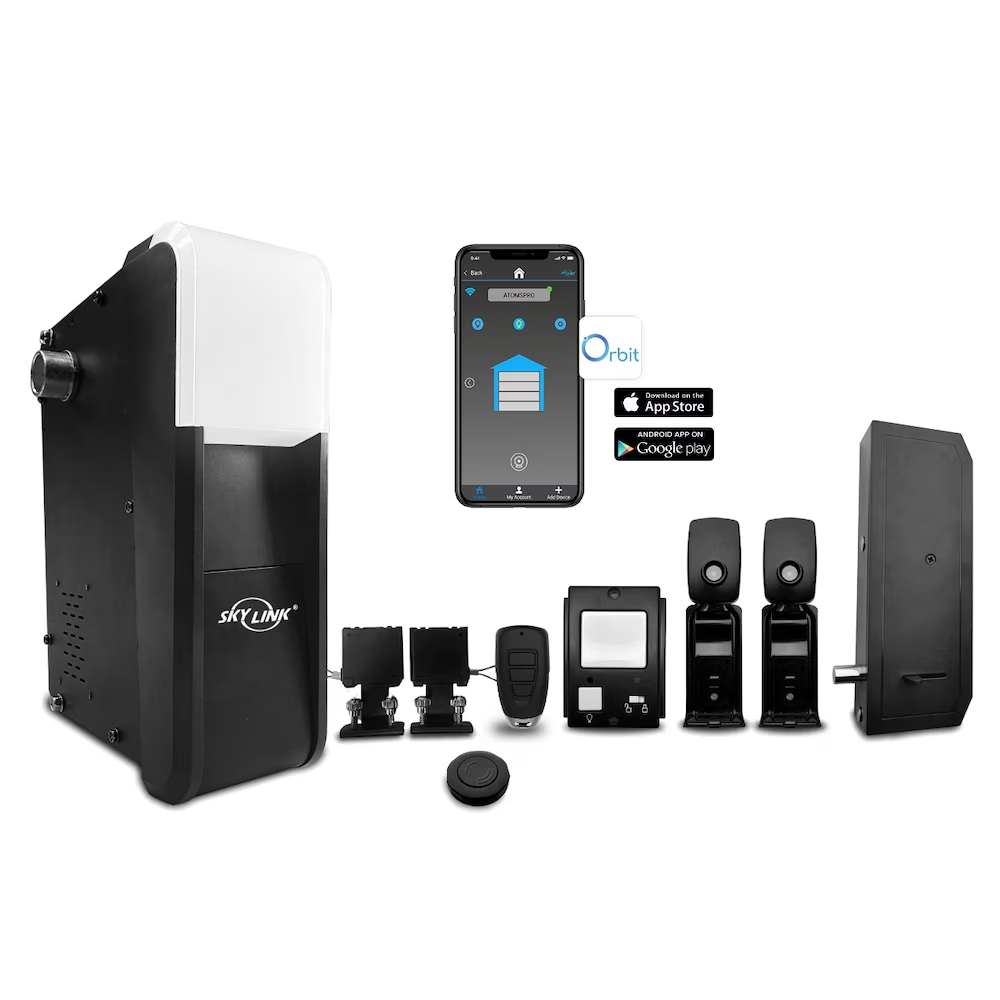
4. Skylink Atoms Wall Mount Opener
Skylink offers a side mount opener that has gained attention among DIYers looking for value. It provides the core benefits of a jackshaft opener at a significantly lower price point.
Pros
- Most affordable option (often under $400).
- Slim design good for tight spaces.
- Includes Wi-Fi and LED light.
- Clear instructions for DIY installation.
Cons
- Less well-known brand/durability track record.
- App interface is less polished than myQ.
- No automatic deadbolt lock included.
The Perks vs. The Quirks
| The Perks (Pros) | The Quirks (Cons) |
|---|---|
| Space Saver Supreme: Ceiling’s the limit! Storage, lights, kayaks – you name it. | Wallet Whammy: Expect to shell out a bit more upfront compared to traditional openers. |
| Whisper Quiet: Often quieter than their chain-rattling cousins. Happy neighbors, happy you. | Installation Hurdles: DIY-able for some, but pro install is often the smarter (and safer) move. |
| Curb Appeal Boost: Sleek, modern look. No more ceiling rail eyesores. | Wall Space Demands: Gotta have that side wall real estate to make it work. |
| Vibration Vacation: Less rumble and shake. Good news if garage is under a bedroom. | Repair Bills?: Specialized parts could mean pricier fixes down the line. |
| Smarty Pants Features: Loaded with tech – security, smart home hookups, the works. | Door Compatibility Check: Might not play nice with every garage door (needs Torsion springs). |
Quick Comparison Matrix
Other brands like Guardian (Model 928) or Sommer exist, but the four above are the market leaders.
| Brand / Model | Cool Stuff | Smart Home? | Backup Battery? | Shhh Factor |
|---|---|---|---|---|
| LiftMaster 98022 | Wi-Fi, Battery, Auto-Lock, Heavy Duty | MyQ | Yes | Ninja Quiet |
| Chamberlain RJO101 | Wi-Fi, MyQ, Space Saving, Auto-Lock | MyQ | Yes | Quiet |
| Genie 6172H-B | Aladdin Connect, Safe-T-Beam | Aladdin Connect | Yes | Quiet |
| Skylink Atoms | Slim Design, LED, Affordable | SkylinkNet | No (Optional) | Quiet |
| Marantec Synergy | DC Motor, Fancy Wall Button | Optional | No | Quiet |
How to Choose?
When comparing models, always check the horsepower or lifting capacity, whether battery backup is included, what security features are there, and the smart connectivity options. Most will have Wi-Fi/app capabilities either built-in or via an add-on.
- LiftMaster 98022: Best for quality and features. High price, pro-grade.
- Chamberlain RJO101: Best for DIYers wanting features. Hard to find sometimes.
- Genie 6172H-B: Best for Smart Home integration (Alexa/Google) without fees.
- Skylink Atoms: Best for Budget and tight spaces.
When shopping, consider which features matter most to you – do you need ultra-quiet? Battery backup? Is smartphone control a must-have? By comparing the models above, you’ll be able to pick a side mount garage door opener that perfectly suits your needs.
Installation Guide: DIY vs. Professional
One big question homeowners have is whether they can install a side mount garage door opener themselves or if they should hire a professional. The answer depends on your comfort with DIY projects, particularly those that involve mechanical setup and some wiring.
DIY Installation: Step-by-Step Overview
Preparation and Safety Check
Start by ensuring your garage door is properly balanced. You should be able to lift it manually fairly easily. Clear the area, gather your tools (wrenches, drill, screwdrivers), and disconnect any old opener.
Mounting the Opener
Identify the torsion bar end. Slide the opener’s drive coupler directly onto the torsion shaft. Attach the mounting bracket to the wall (into a stud) and secure the opener to it. Tighten the set screws on the coupling to lock the opener to the bar.
Attach Cable Tension Monitor
Install the cable tension monitor near the bottom of the door. This safety device detects if the cable goes slack. Ensure it is positioned so the roller presses against the cable when taut.
Install Safety Sensors & Controls
Mount the photo-electric safety sensors near the floor (4-6 inches high) on both sides. Mount the wall control panel near the door. Run all wires back to the opener unit neatly, using staples to secure them.
Wiring, Power & Programming
Connect sensor and wall control wires to the opener terminals. Plug the unit in. Follow the manual to set "Travel Limits" (how far the door opens/closes) and Force Limits. Finally, program your remotes and connect to Wi-Fi if applicable.
Common Challenges for DIYers
- Ensuring Compatibility: Your door must have a torsion spring system. Extension springs (stretching along the sides) won't work without conversion.
- Mounting Alignment: The opener must sit flush and perpendicular. Paint or burrs on the torsion bar can make sliding the coupler on difficult.
- Drilling into Concrete/Steel: Mounting brackets might need to go into concrete or steel frames, requiring special drill bits.
- Wiring Routing: Keeping wires neat and away from moving parts takes planning.
When to Call a Professional
You should consider hiring a pro if:
- You are uncomfortable working around torsion springs (high tension!).
- You need to convert from extension springs to torsion springs.
- You lack the necessary tools (hammer drill, tall ladder).
- You have low clearance issues or high-lift tracks requiring modification.
Professional installation typically takes 2-3 hours and often includes a door tune-up.
Common Issues and Troubleshooting
Even the best openers can run into occasional issues. Here are fixes for common side mount quirks.
1. Opener is Not Responding at All
Check the power supply (is it plugged in? breaker tripped?). If the remote isn't working but the wall button is, check the Lock Mode on the wall console—if enabled, it blocks remotes.
2. Door Closes, Then Reverses (Open Lights Blink)
This is almost always the Safety Sensors. Check for misalignment, dirt on the lenses, or obstructions. Also check for loose wires. If the lights blink 10 times, the sensors are blocked.
3. Opener Starts But Door Doesn't Move
Check if the Manual Release is engaged (disconnecting the motor). Also, verify the door isn't physically locked. If you hear the motor humming but the bar isn't turning, check the coupler set screws.
4. Cable Tension Monitor Error
Specific to side mounts. If you see a code regarding cable tension, inspect your cables. If they are loose or off the drum, do not run the opener. Call a pro to reset the cables safely.
5. Wi-Fi / App Connection Issues
If the app stops working, power cycle the opener (unplug for 10s). Ensure your Wi-Fi signal in the garage is strong enough. You may need to go through the Wi-Fi setup process again if you changed your router.
Maintenance Tips
- Lubricate: Twice a year, spray garage door lube on springs, hinges, and rollers (not the opener itself).
- Check Sensors: Keep lenses clean of dust and cobwebs.
- Test Auto-Reverse: Place a 2x4 under the door and close it. It should reverse upon contact.
- Battery Backup: Replace the battery every 2-3 years if equipped.
Security and Smart Features
One of the big selling points of modern side mount garage door openers is the array of security and smart features they offer. Upgrading to a jackshaft opener isn’t just a hardware improvement; it can also boost your home’s security and integrate your garage into your smart home ecosystem.
Enhanced Security for Your Garage
Automatic Deadbolt Locks
Models like the LiftMaster 98022 include a steel deadbolt that automatically engages when the door closes. It shoots a pin into the track, making it nearly impossible to force the door open.
No Central Rail
Traditional openers have a release cord that burglars can sometimes "fish" from outside. Side mounts eliminate this vulnerability entirely.
Rolling Code Tech
Security+ 2.0 (LiftMaster) and Intellicode (Genie) generate a new code every time you use the remote, preventing code-grabbing thieves.
Real-Time Alerts
Receive notifications on your phone instantly if your garage door opens unexpectedly while you aren't home.
Smart Features and Home Integration
Garage door openers have joined the Internet of Things. Here is what you can expect:
- Smartphone Control: Use apps like myQ or Aladdin Connect to open/close your door from anywhere. Perfect for letting in delivery drivers or friends.
- Voice Control: Integrate with Amazon Alexa or Google Assistant. "Alexa, close the garage door."
- Amazon Key: Secure in-garage delivery for packages (available with myQ compatible openers).
- Scheduling: Program your door to close automatically every night at 10 PM so you never leave it open by accident.
Pricing and Where to Buy
How much is this going to cost? Let’s break down the pricing for side mount garage door openers.
Pricing Breakdown
- Entry Level ($650 - $800): Models like the Skylink Atoms or basic Genie units.
- Mid-Range ($750 - $850): Standard LiftMaster or Chamberlain RJO models without all the accessories.
- High-End ($850+): The LiftMaster 98022 or fully loaded Chamberlain RJO101 kits (often including battery, lock, and installation).
- Professional Installation: Typically adds $250 - $300 to the cost, but ensures safety and warranty coverage.
Where to Buy
- Garage Door Specialists (Recommended): Companies like GVA Garage Doors offer expert advice, professional-grade models (like LiftMaster), and bundle installation for better value.
- Home Improvement Stores: Home Depot or Rona carry Chamberlain and Genie brands for DIYers.
- Online Retailers: Amazon carries many models, but be wary of warranty validity and shipping damage on heavy items.
Final Thoughts & Recommendations
To wrap up this guide, let’s summarize our top picks for different needs.
🏆 Best for Quiet Operation
LiftMaster 98022 Elite Series. Its DC motor and soft start/stop make it whisper quiet. Perfect if you have a bedroom above the garage.
📏 Best for Tight Spaces
Skylink Atoms. Specifically designed with a slim profile for compact installation areas.
🧠 Best for Smart Home Users
Genie 6172H-B. Offers excellent integration with Alexa and Google Assistant without requiring extra subscriptions.
🛡️ Best for Security
LiftMaster 98022 / Chamberlain RJO101. The inclusion of the automatic physical deadbolt lock offers peace of mind that can't be beat.
Why GVA Garage Doors?
As a trusted provider in the Greater Vancouver Area, we specialize in high-quality installations. We don't just sell you a box; we provide:
- Expert Consultation: We ensure the opener fits your specific door and track type.
- Professional Installation: Safe, code-compliant setup of torsion springs and wiring.
- After-Sales Support: Real people to help you if you have questions later.
Ready to Transform Your Garage?
Get that sleek, quiet, and secure garage you've always wanted.
BOOK A CONSULTATION WITH GVA