
Atmospheric Rivers Are Hammering Fraser Valley Homes—Is Your Garage Ready?
Last updated: December 2025
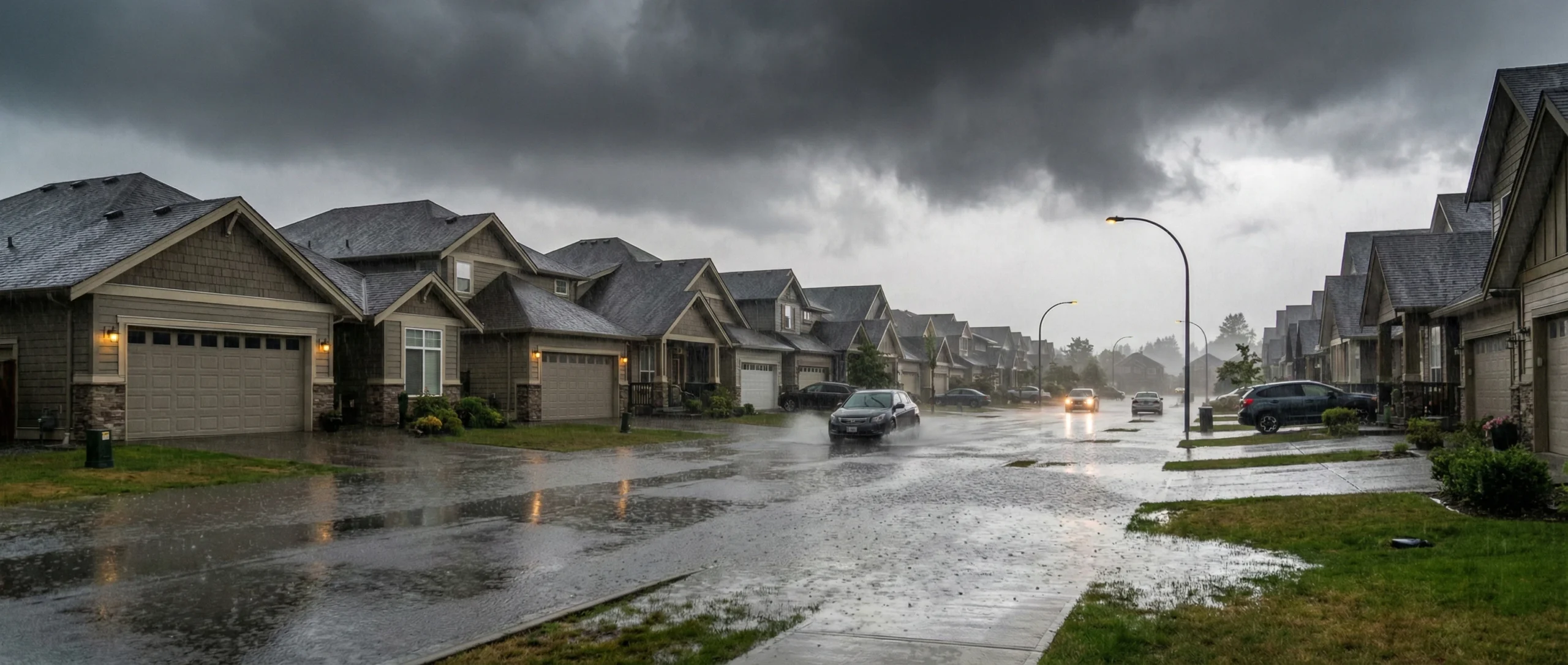
If you've lived in Surrey or anywhere in the Fraser Valley for the past few years, you've probably heard meteorologists use a term that sounds like it belongs in a science fiction movie: atmospheric river.
These massive weather systems have become an increasingly common part of our fall and winter vocabulary—and for good reason. When an atmospheric river hits the Lower Mainland, we're not talking about your average rainy day. We're talking about 70 to 110 millimetres of rain dumping onto our neighbourhoods in just 24 hours. That's the kind of water volume that overwhelms drainage systems, floods low-lying areas, and yes, wreaks havoc on garage doors across Surrey.
The thing is, most homeowners don't think about their garage door until it stops working—often at the worst possible moment. Picture this: it's 6:30 AM, the rain is hammering down, you need to get to work, and your garage door won't budge. Sound familiar? You're not alone. Our team at GVA Garage Doors sees a significant spike in emergency repair calls every time Environment Canada issues an atmospheric river warning for our region.
This article is your complete guide to understanding how these extreme weather events affect your garage door, what you can do to prepare before the next storm hits, and how to respond if the damage has already been done.
What Exactly Is an Atmospheric River? (And Why Should Surrey Homeowners Care?)
Let's start with the basics, because understanding what we're dealing with helps explain why your garage door is particularly vulnerable.
An atmospheric river is essentially a long, narrow corridor of water vapour that travels through the sky from tropical regions toward the poles. Think of it as a river in the atmosphere—some of these systems can be 400 to 600 kilometres wide and carry moisture equivalent to 15 to 20 times the average flow of the Mississippi River. When that moisture hits the mountains of British Columbia, it has nowhere to go but down.
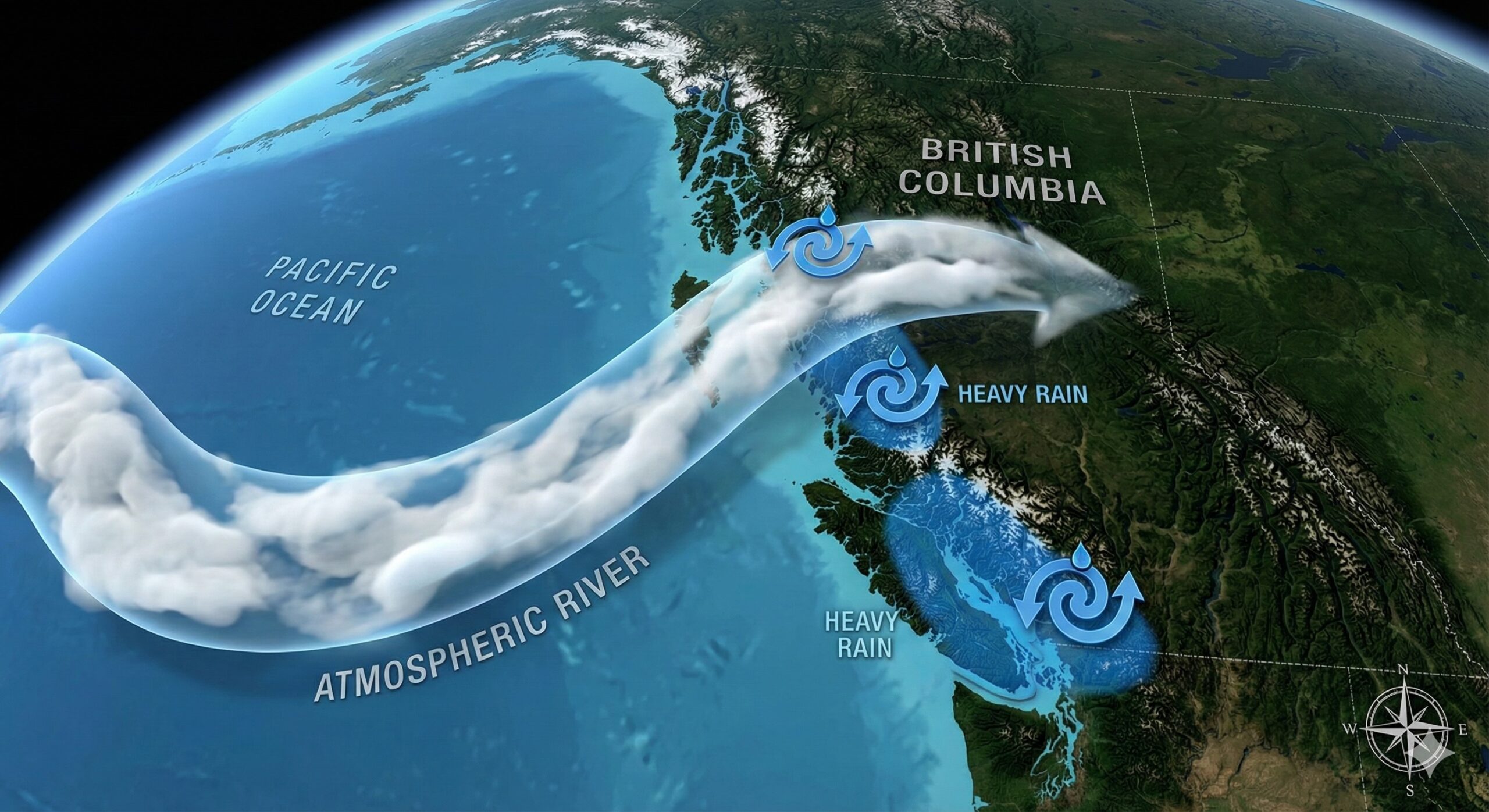
The Fraser Valley sits in a particularly challenging geographic position. We're essentially at the bottom of a massive funnel created by the Coast Mountains and the Cascade Range. When an atmospheric river makes landfall along BC's South Coast, the moisture gets squeezed out over our communities with remarkable intensity.
Why the Fraser Valley Gets Hit So Hard
Here's what makes our region different from, say, Calgary or even Victoria. We experience what meteorologists call orographic enhancement—basically, the mountains force the moist air upward, cooling it rapidly and wringing out every drop of moisture. The result? Surrey and surrounding areas can receive significantly more rainfall than coastal communities just a few kilometres away.
During the atmospheric river event of November 2021, parts of the Fraser Valley recorded over 250 millimetres of rain in 48 hours. The Sumas Prairie flooded catastrophically. Highways washed out. And across Surrey, Newton, Cloverdale, and Fleetwood, homeowners discovered that their garages had become unintended swimming pools.
The warming climate is making these events more frequent and more intense. What used to be a once-every-few-years occurrence is now something we can expect multiple times each fall and winter season. Environment Canada has started ranking atmospheric rivers on a scale of 1 to 5, similar to how hurricanes are categorized, because they've become that significant.
The Three Ways Atmospheric Rivers Destroy Garage Doors
When we respond to storm-related service calls, we see the same patterns of damage over and over. Understanding these failure points can help you take preventive action before the next big storm.
1. Seal and Weatherstripping Failure: The Silent Invader
The weatherstripping around your garage door is your first line of defence against water intrusion. Under normal rainfall conditions, a well-maintained seal keeps your garage dry and comfortable. But atmospheric river conditions aren't normal.
During these extreme events, rain doesn't fall straight down—it comes at you sideways, driven by powerful winds. Water finds its way into gaps that would never be a problem during regular weather. The sheer volume overwhelms drainage pathways, and water pools against your garage door rather than draining away.
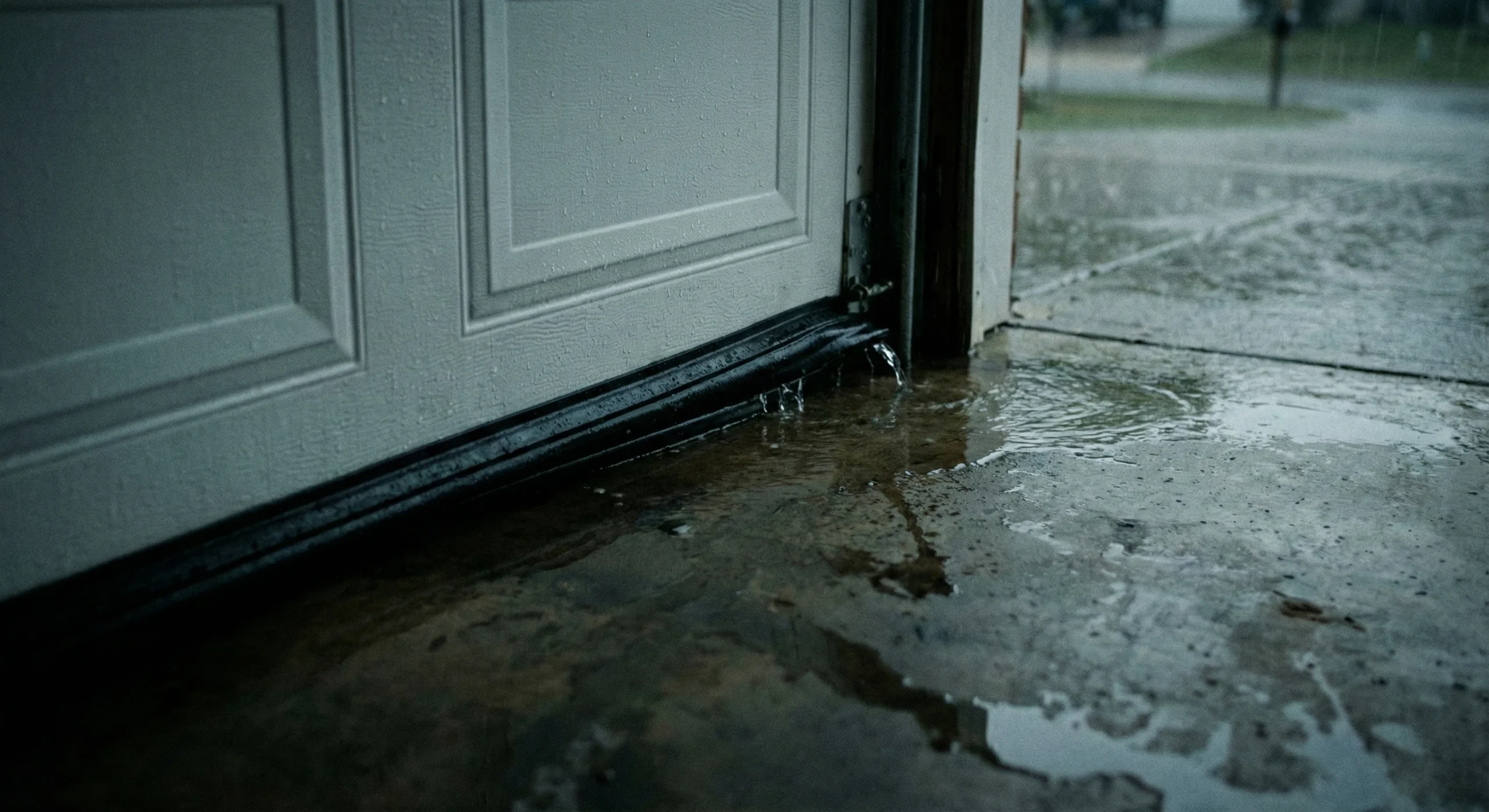
Signs Your Weatherstripping Is Already Compromised
- Visible daylight around the edges of your closed garage door
- Cracked, brittle, or hardened rubber seals
- Water stains on the garage floor near the door perimeter
- Drafts or temperature fluctuations inside the garage
- Insects or debris finding their way inside
Here's something many Surrey homeowners don't realize: our climate is particularly hard on weatherstripping. With 199 rainy days per year and humidity levels that hover between 75% and 88% through the winter months, rubber seals deteriorate faster here than in drier regions. What might last 8 to 10 years in the Okanagan could need replacement after just 4 to 5 years in the Fraser Valley.
2. Electrical and Motor Damage: When Water Meets Wiring
Your garage door opener is essentially a computer-controlled motor system, and water is its natural enemy. During atmospheric river events, we see two primary types of electrical damage.
- Direct Water Intrusion: When water enters through compromised seals or roof leaks, it can drip directly onto your opener unit. Even a small amount of moisture can short-circuit control boards, corrode electrical connections, and damage the motor itself. The tricky part is that this damage isn't always immediately apparent—corrosion can develop over days or weeks, leading to sudden failure long after the storm has passed.
- Power Surge Damage: Atmospheric rivers are often accompanied by lightning storms and high winds. Both can cause power fluctuations that damage sensitive electronics. A single power surge can fry the circuit board in your garage door opener, leaving you with a door that won't respond to commands—or worse, one that operates erratically.
Protecting Your Garage Door Electronics: Consider installing a surge protector specifically designed for garage door openers. It's a small investment (typically $30 to $50) that can prevent hundreds of dollars in damage. Also, if you know an atmospheric river is coming, unplugging your opener until the storm passes is a simple precaution that eliminates surge risk entirely.
3. Mechanical Stress and Component Fatigue
The physical forces during an atmospheric river go beyond just rain. Wind gusts during these events can exceed 80 km/h, creating significant pressure differentials against your garage door. This stress accelerates wear on springs, cables, rollers, and hinges.
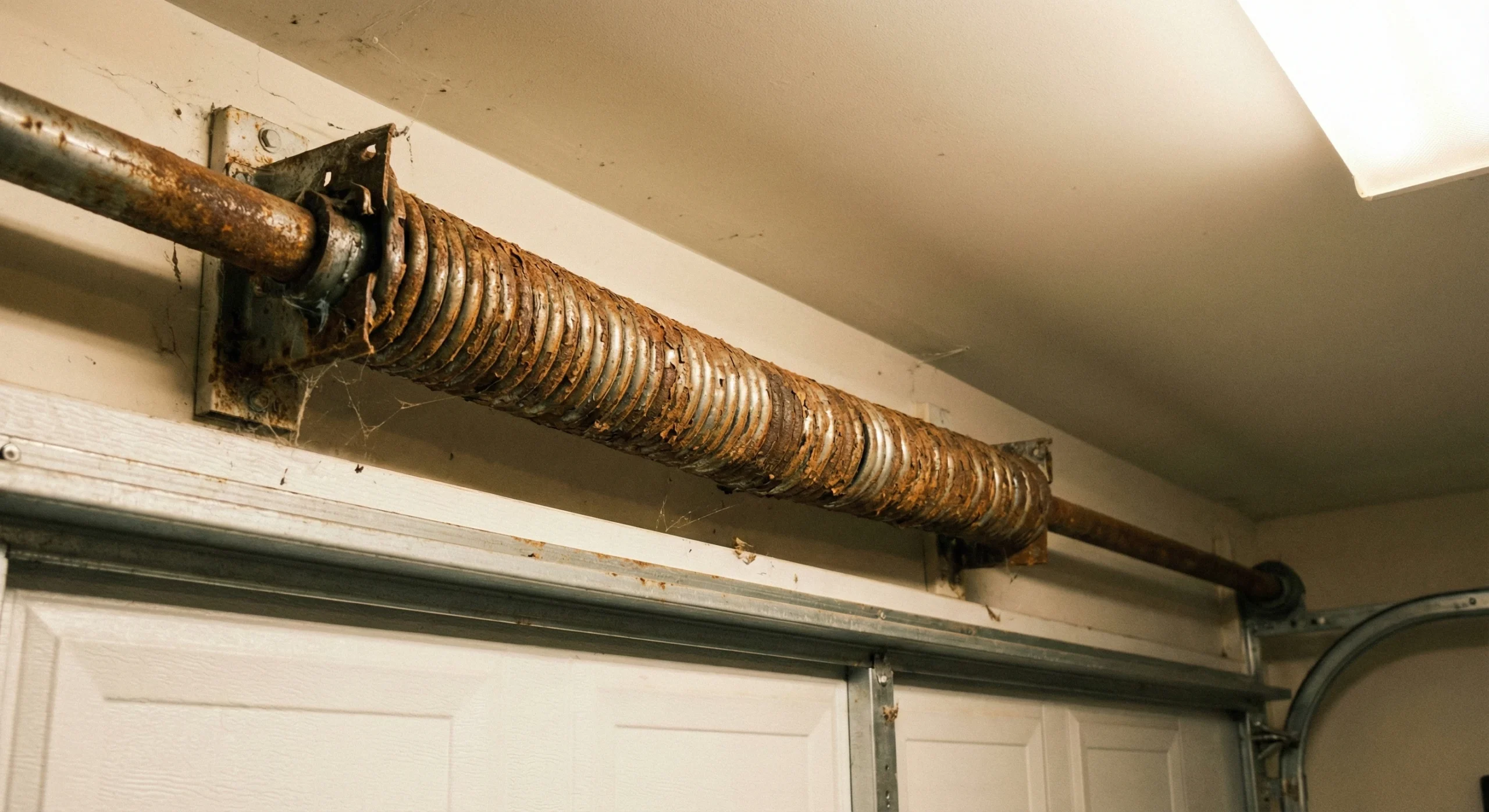
The Hidden Danger: Moisture in Moving Parts. Water that enters the garage door system doesn't just cause immediate problems—it creates long-term issues that compound over time. Moisture accelerates rust formation on metal components, including the torsion springs that bear the weight of your door. A rusted spring doesn't just fail gradually; it can snap suddenly, creating a serious safety hazard.
The tracks that guide your door up and down are also vulnerable. Water pooling in the tracks can freeze during cold snaps following a storm, preventing the door from operating. Debris washed into the tracks by flooding can jam the rollers. And moisture-compromised lubricant loses its protective properties, leaving metal-on-metal contact that accelerates wear.
Your Pre-Storm Preparation Guide
Environment Canada typically provides 24 to 48 hours advance notice before an atmospheric river makes landfall. Here's how to use that time wisely.
48 Hours Before the Storm
- Inspect Your Weatherstripping: Walk around your closed garage door and look carefully at every seal. Press on the rubber—it should be pliable, not hard or cracked. Check the bottom seal especially; this is where most water enters during heavy rain.
- Clear Your Drainage Pathways: Water needs somewhere to go. Remove leaves and debris from the area immediately in front of your garage door. If you have a floor drain inside the garage, make sure it's clear. Check that downspouts are directing water away from the garage foundation, not toward it.
- Test Your Door's Operation: Open and close your garage door a few times, paying attention to any unusual sounds—grinding, scraping, or squealing can indicate components that need attention. A door that's already struggling won't fare well under storm stress. If something seems off, calling for professional service before the storm is far better than dealing with a complete failure during or after.
24 Hours Before the Storm
- Apply Temporary Weatherproofing If Needed: If you've identified gaps in your weatherstripping but don't have time for a proper replacement, temporary measures can help. Self-adhesive foam weatherstripping from any hardware store can provide short-term protection. It's not a permanent solution, but it can make the difference between a dry garage and a flooded one.
- Protect Electrical Components: If your opener is connected through a standard outlet (not hardwired), consider unplugging it during the storm and using the manual release to operate the door. This eliminates any risk of power surge damage. Just make sure you know how to operate your door manually before the storm hits—you don't want to be figuring that out in the dark with rain pouring down.
- Elevate Stored Items: If your garage is in a flood-prone area, especially in Surrey neighbourhoods near the Fraser River like Bridgeview or South Westminster, move valuable items to higher shelves or out of the garage entirely. Floodwater can rise remarkably fast during atmospheric river events.
During the Storm
Once the atmospheric river arrives, your job is mostly to monitor the situation and avoid making things worse.
- Avoid operating your garage door unnecessarily. Each cycle during extreme conditions puts additional stress on components and creates opportunities for water intrusion.
- If you notice water entering, use towels or a wet-dry vacuum to manage it. Don't let it pool against the door or reach electrical components.
- Listen for unusual sounds. Creaking, popping, or groaning from your garage door during wind gusts could indicate structural stress.
- Never try to force a door that's not operating normally. If your garage door gets stuck, leave it until conditions improve rather than risking injury or further damage.
Post-Storm Assessment: What to Check Once the Rain Stops
The danger doesn't end when the atmospheric river passes. Many issues only become apparent in the hours and days following a major storm. Here's a systematic approach to assessing your garage door.
Immediate Visual Inspection (Within 24 Hours)
- Check the garage floor for water damage. Look for water stains, pooling, or tide marks that indicate how high water may have risen.
- Inspect the weatherstripping for debris. Leaves, twigs, and silt can get lodged in seals during heavy rain, preventing proper closure.
- Look at the tracks for debris or water residue. Anything that interferes with smooth roller movement should be cleaned out.
- Examine metal components for new rust spots. Pay special attention to springs, hinges, and roller shafts.
- Check your opener unit for signs of moisture. Visible water droplets, condensation, or a musty smell could indicate water intrusion.
Functional Testing (48-72 Hours After)
Once any standing water has drained and you've completed visual inspection, test your door's operation carefully.
- Test the manual release. Disconnect the opener and lift the door by hand. It should move smoothly and stay in place when you let go. A door that slams down or won't stay up likely has spring problems.
- Reconnect and test the opener. Listen for unusual sounds—clicking, grinding, or humming without movement can indicate electrical damage.
- Test the safety sensors. Place an object in the door's path and attempt to close it. The door should reverse immediately. Sensors can be knocked out of alignment by debris or affected by water damage.
- Check remote and wall button function. Both should operate the door reliably. Intermittent response could indicate moisture in the control circuitry.
When to Call a Professional
Some post-storm issues require professional attention. Here's when to pick up the phone rather than attempting DIY repairs.
- Spring damage or imbalance. Garage door springs are under extreme tension and can cause serious injury if handled improperly. If your door won't stay up or moves unevenly, this is a job for professionals.
- Electrical problems. If your opener shows signs of water damage—sparking, burning smell, inconsistent operation—don't try to troubleshoot it yourself. Water and electricity are a dangerous combination.
- Structural damage to panels. Dented, bowed, or cracked panels compromise your door's integrity and weather resistance.
- Track misalignment. If the door binds, jumps, or makes scraping sounds, the tracks may have been shifted by wind stress or impact.
- Any doubt about safety. Garage doors are heavy and complex. If something doesn't feel right, the safe approach is always to consult a professional.
Long-Term Solutions for Atmospheric River Resilience
If you're tired of worrying every time Environment Canada issues an atmospheric river warning, there are upgrades and modifications that can dramatically improve your garage door's storm resilience.
- Commercial-Grade Weatherstripping Systems: Standard residential weatherstripping is designed for average conditions. Commercial-grade systems use heavier-duty materials—thicker rubber, reinforced mounting, and designs that seal more effectively against wind-driven rain. The upfront cost is higher, but these systems last longer and perform better when you need them most. For Surrey's climate specifically, look for weatherstripping rated for high-moisture environments. Some products include antimicrobial treatments that resist the mould and mildew that can develop during our wet winters.
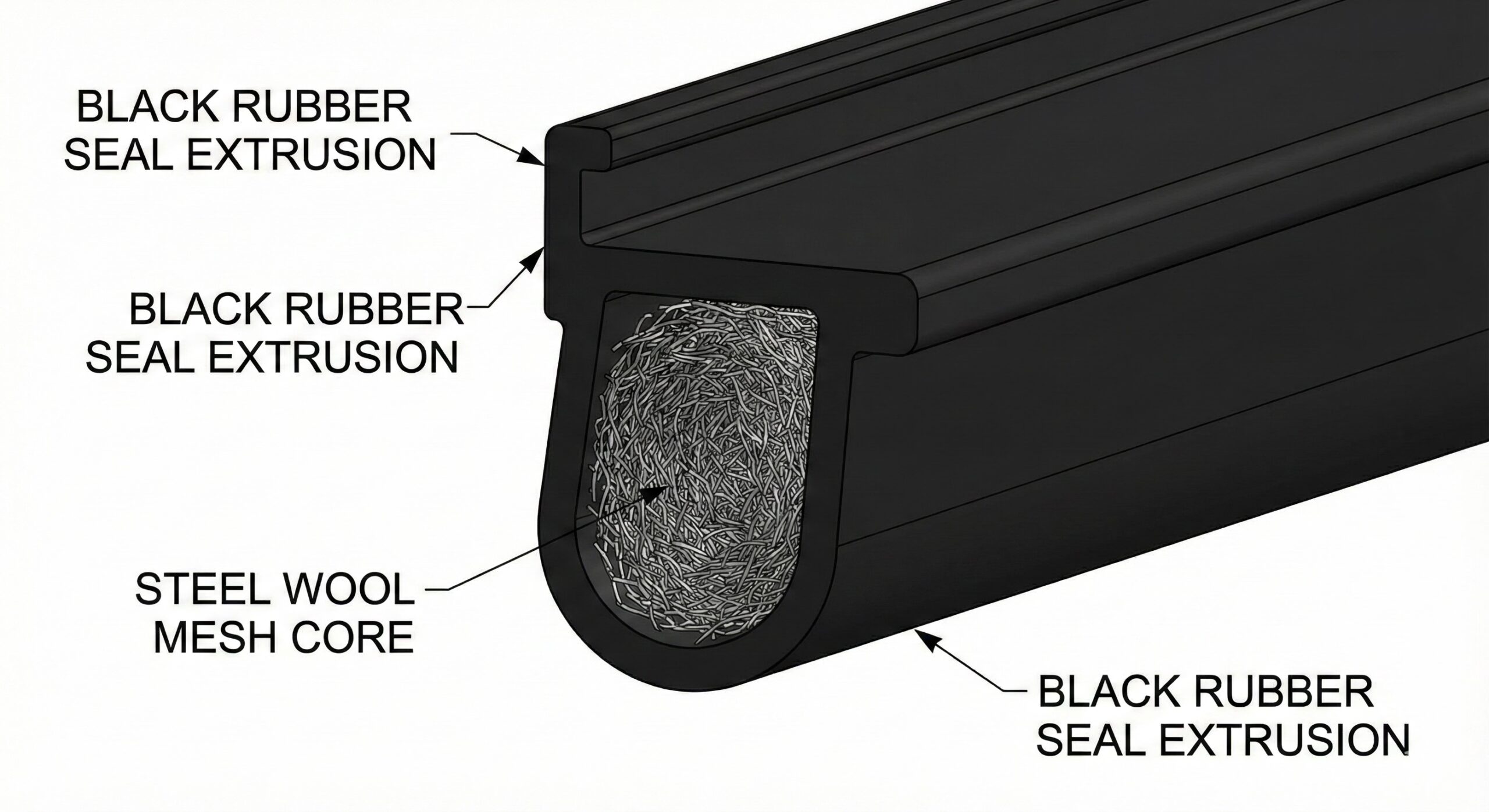
- Enhanced Drainage Solutions: If water pooling against your garage door is a recurring problem, there are several approaches to consider. Threshold Seals with Drainage Channels install on the garage floor and create a raised barrier that water must overcome. French Drains and Catch Basins are effective for homes in flood-prone areas, intercepting water before it reaches your door.
- Impact-Resistant Door Options: If you're in the market for a new garage door, consider models specifically designed for extreme weather. Wind-rated doors feature reinforced construction, additional bracing, and hardware designed to resist the pressure differentials created during storms.
- Backup Power Solutions: Power outages often accompany atmospheric rivers. Consider Battery Backup Openers which provide 20 to 50 cycles during outages, or a Standalone UPS System for your electronics.
The Real Cost of Ignoring Atmospheric River Preparation
Let's talk numbers, because the financial argument for preparation is compelling.
Prevention Cost
- Replacing weatherstripping: $75-150
- Surge protector: $30-50
- Regular maintenance service: $100-150
Damage Cost
- Mould remediation: $1,000 - $10,000+
- New Opener/Circuit Board: $400 - $800
- Emergency Repair Calls: $200 - $500+
Perhaps most importantly, there's the inconvenience factor. Being trapped in (or out of) your garage during a major storm isn't just frustrating—it can affect your ability to evacuate in an emergency.
Surrey Neighbourhood-Specific Considerations
Not all areas of Surrey face the same level of risk during atmospheric river events. Here's what homeowners in different neighbourhoods should keep in mind.
Bridgeview and South Westminster
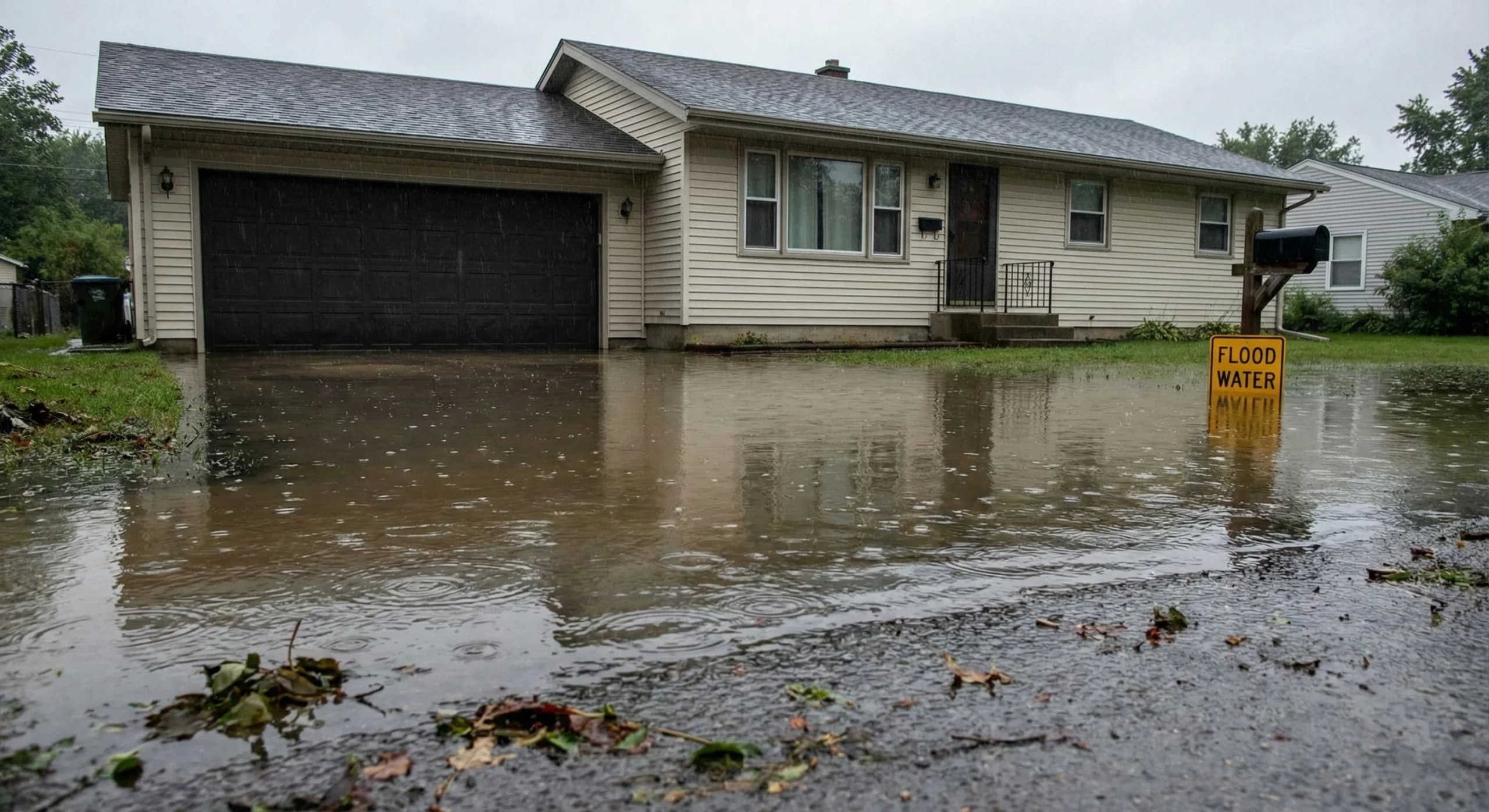
These neighbourhoods sit in Surrey's Fraser River floodplain—776 hectares of developed land that's vulnerable to river flooding. Flood preparedness isn't optional here. Consider waterproof threshold seals and elevated storage.
Newton and Whalley
Established neighbourhoods with older homes. Many original garage door systems from the 70s-90s aren't designed for today's intense weather. Hardware upgrades are often necessary.
South Surrey and Morgan Creek
Newer construction often features larger doors (three-car garages). Larger doors present more surface area for wind loading and water intrusion, making maintenance critical.
Cloverdale and Clayton Heights
Agricultural heritage means many properties have detached garages or shops. Don't neglect these outbuildings in your preparation plans.
Your Atmospheric River Readiness Checklist
Seasonal (Every Fall)
- Inspect/replace weatherstripping
- Lubricate moving parts
- Test door balance
- Clear drainage pathways
- Install surge protector
When Warning Issued
- Remove debris from perimeter
- Apply temporary waterproofing
- Unplug opener
- Know manual operation
- Elevate stored items
Post-Storm
- Check for water damage
- Inspect seals for debris
- Look for new rust
- Test sensors
- Call pro for damage
Final Thoughts: Preparation Is Peace of Mind
Atmospheric rivers are part of life in the Fraser Valley now. Climate scientists tell us they're going to become more frequent and more intense in the years ahead. That's not a reason to panic—it's a reason to prepare.
Your garage door is one of the largest moving objects in your home and one of the primary barriers protecting your property from the elements. Taking care of it isn't just about convenience; it's about protecting your home, your vehicles, and your family's safety during extreme weather.
At GVA Garage Doors, we've helped thousands of Surrey homeowners prepare for and recover from storm damage. Whether you need a pre-season inspection, emergency repair after a storm, or advice on upgrading to more weather-resistant systems, we're here to help. We understand the unique challenges that Fraser Valley weather presents, and we're committed to keeping Surrey's garage doors working safely, no matter what the weather brings.
Don't wait for the next atmospheric river warning to think about your garage door. A little preparation now can save a lot of stress—and expense—later.
Ready to Storm-Proof Your Garage Door?
Our Surrey technicians specialize in weatherproofing garage doors for Fraser Valley conditions. Contact GVA Garage Doors for a pre-storm inspection or to discuss upgrade options.
We respond in 1-2 hours.